
Mobile App Development
Mobile app development in Muscat and across Oman
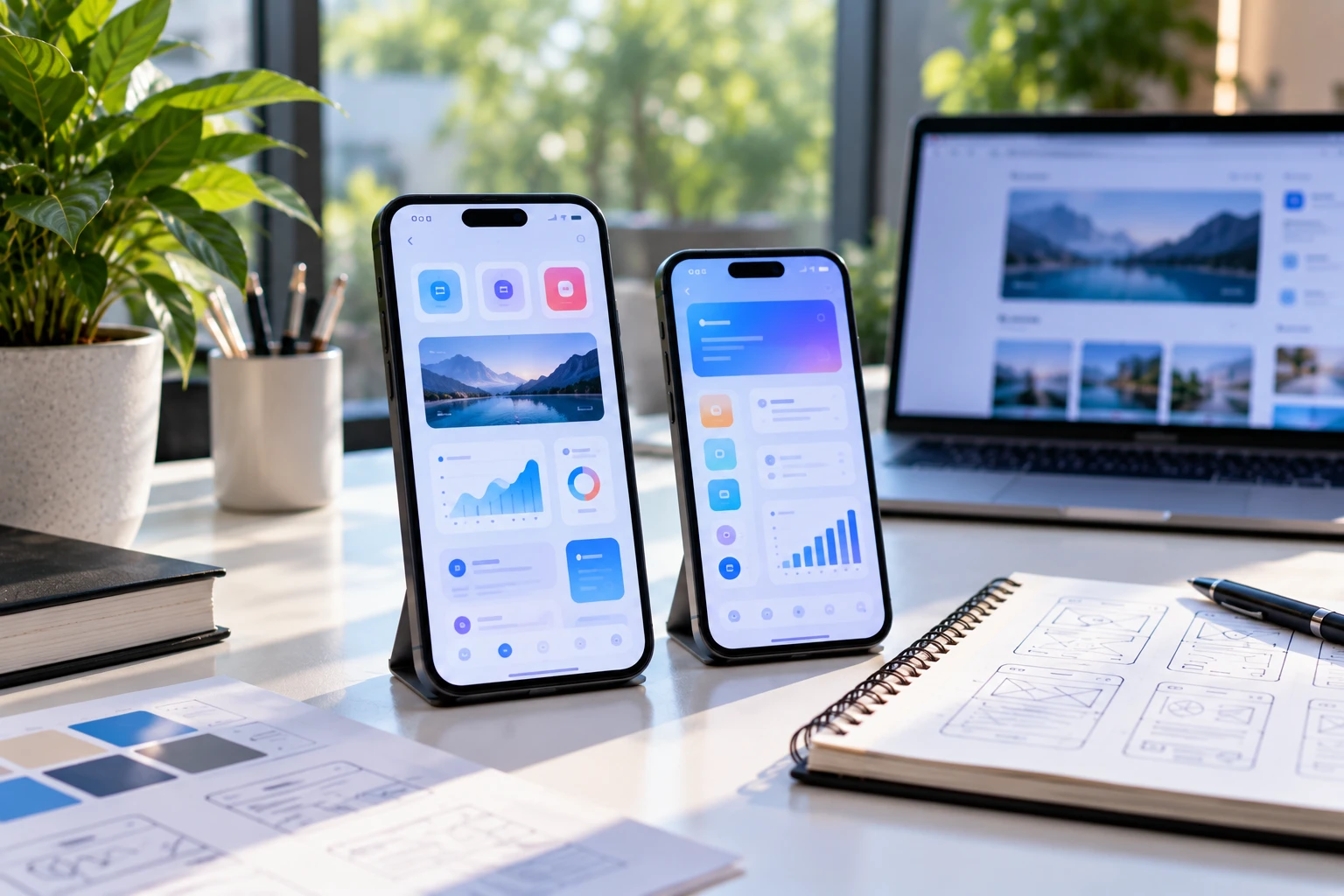
What's included
What we cover
Discovery and app strategy
Decide whether a native app, a cross-platform app or a progressive web app fits the users, budget and features required.
UX and interface design
Screen flows and layouts tested with real users before development starts.
iOS and Android build
Cross-platform builds with tools such as Flutter or React Native, or native development where device features demand it.
Back end and APIs
Secure login, data storage and APIs that connect the app to your existing systems.
App store submission
Prepare listings, privacy information and builds for App Store and Google Play review.
Testing, release and updates
Device testing, staged release, crash monitoring and a plan for OS updates.
Not sure what you need? Tell us about your project in a few lines. We will reply with next steps and a quotation, no obligation.
What you get
Deliverables
- iOS and Android apps
- Customer booking and ordering apps
- Field service and reporting apps
- Back end and APIs
- App store submission
- Updates and support
How it works
How our mobile app development process works in Oman
Discovery call
We ask who the app is for, what they need to do in it, which phones they use and how it connects to the systems you already run. We also check whether you need an app at all, or whether a website or progressive web app would serve you better.
You get: A short written scope and a first-phase quote
Choose the approach
iOS, Android or both? Cross-platform with Flutter or React Native, native, or a progressive web app? We explain the trade-offs in plain terms, including cost and who will maintain the app afterwards.
You get: A recommended platform and technology plan
Design the screens
After the quotation is approved, we draw the screen flows and layouts and show you a design preview, so problems are found before development starts. If you need the design first, we can do the design work as a service.
You get: Approved screen designs
Build the app and its back end
The app, its secure back end and any admin panel are built together, in phases. A first version is installed on real phones early, so feedback shapes the rest. Integrations with your existing system are built and tested along the way.
You get: Test builds on your own devices
Test and publish to the stores
Testing on real iOS and Android devices, then App Store and Google Play listings, privacy information and review. Developer accounts are registered in your company name so you keep control of the app.
You get: A store-ready app and listings
Release, update and support
Staged release, crash monitoring, and a plan for OS updates, fixes and new features after launch.
You get: A live app and a support plan
What we build
What else we build: software, apps and automation
Web applications are only one part of what we do. Pick the kind of system you need, or tell us the problem and we will recommend one.
- Custom Software DevelopmentCustom business software, HRM, ERP integrations, portals, dashboards and system integrations.
- HRM and Payroll SoftwareOur own HRM software: employee records, attendance, leave, payroll and recruitment, with a billing link, API and an MCP server so AI assistants can read and write data.
- CRM and Sales SoftwareOur own CRM: leads, sales pipeline, quotations with approval, follow-ups, service requests and AMC contracts.
- ERP, Billing and Inventory SoftwareBillMate, our own billing, inventory and accounting software for shops and distributors, with reports and stock control.
- RFID Inventory SoftwareOur own RFID inventory system for warehouses and stores: tag printing, goods intake, dispatch, store requests and store exit alarms.
- Website DevelopmentBusiness websites, e-commerce stores and web applications built for enquiries, speed and search visibility.
- AI Automation ServicesAutomating repetitive office work, customer replies and reports with AI, connected to the systems you already use.
- Cloud Migration ServicesPlanning and moving servers, applications and data to the cloud, with backup, security and support.
Common problems
Issues we help you solve
- Customers book or order by phone and WhatsApp, and requests get lost
- Field staff report on paper or messaging apps
- No way to send customers reminders or offers directly
- An existing system that staff can only use from a desk
Where it is used
- Customer booking and ordering apps
- Field service and reporting apps
- Staff and HR self-service apps
- Loyalty and offers apps
- Companion apps for existing systems
System components
- iOS
- Android
- Push notifications
- APIs
FAQ
Common questions
Do you build for both iOS and Android?
Yes. A cross-platform build usually covers both from one codebase; native builds are recommended only where a feature requires them.
How long does it take to build an app?
It depends on features and integrations. We agree a phased plan after discovery so a first version can be tested with real users early.
Do you build apps for companies outside Oman?
Yes. We also build mobile apps for companies across the GCC, working remotely. See our mobile app development for the GCC page.
Native, Flutter or React Native: which should we choose?
For most business apps a cross-platform framework such as Flutter or React Native gives iOS and Android from one codebase at a lower cost. Native development makes sense when the app depends on advanced device features, heavy graphics or the newest platform capabilities. We use Flutter in our own products and recommend the option that fits your features and who will maintain it.
Can the app connect to our existing system?
Yes, if the system offers an API, database access or a file export. The app talks to it through a secure back end, so staff and customers see the same data as the office. We check feasibility during discovery.
Have you built mobile apps for staff and field teams?
Yes. Our own HRM and field service software has a mobile app for attendance check-in with location, and for technicians to receive jobs and submit expense receipts from the field. We apply the same approach to custom apps.
How much does a mobile app cost in Oman?
The price depends on the number of screens and features, whether you need iOS, Android or both, the back end and admin panel behind the app, and integrations with other systems. We do not publish a generic price list. After a short discovery call we give a fixed quote for a first phase, so you know the cost before work starts.
How do I choose a mobile app development company in Oman?
Look for a team that starts with discovery, shows you a design preview before building, agrees a fixed price for a first phase, and tells you in writing who owns the source code and the store accounts. Ask how the app will connect to your existing systems and who fixes it after launch. A developer that also builds and runs its own apps can show you how they hold up in daily use.
Does the app need a back end or an admin panel?
Almost always. The app is the part people see; the back end stores the data, handles login and talks to your other systems, and the admin panel lets your staff manage content, orders or users without calling a developer. We scope all three together so the quote covers the whole working system.
Do you provide app support and updates after launch?
Yes. Phones and app stores change every year, so an app needs updates to keep working. We agree a support process before launch that covers bug fixes, OS compatibility updates and new features, and monitor crashes after release.
What does iOS app development in Oman involve?
An iOS app is built for iPhone and iPad and published on the Apple App Store. The work covers design, development, testing on real devices, Apple's review and publishing. We can build it natively for iOS, or with Flutter or React Native so the same app also runs on Android. We explain the trade-off during the first call, and we tell you which fits your budget and users.
What kinds of apps do app development companies in Oman build?
Most business apps in Oman fall into a few types: customer booking and ordering apps, staff and field-team apps, delivery and service tracking, loyalty and membership apps, and apps that give customers or staff access to an existing system. USTS builds all of these, each connected to a secure back end and an admin panel.
Can you build an Android-only or iOS-only app?
Yes. If your users are all on one platform, such as company-issued Android phones, building for one platform costs less and launches sooner. A cross-platform build can add the second platform later.
Who pays for the App Store and Google Play accounts?
Apple and Google each charge for a developer account. We recommend registering both in your company name so that you keep control of the app.
Start a project
Planning a mobile app development project?
Tell us what you need and where. We will reply with next steps and a quotation.